Outward Bound USA Home
45 Years of Outward Bound: The Goins Family Story
Outward Bound USA
For 45 years, the Goins family has returned to Outward Bound – building resilience, confidence, and connection through shared challenge in the outdoors.
One family’s decades-long tradition of stepping outside their comfort zone – and discovering what they’re capable of together.
What started as Wendell’s first Outward Bound course in 1980 became a defining family tradition. Over the decades, each member of the Goins family has faced challenge, discomfort, and growth in the wilderness – carrying those lessons into their lives long after the expedition ends.
 Alumni Stories
Alumni Stories
Alumni Stories
Alumni Stories
Alumni Stories
Alumni Stories
Alumni Stories 45 Years of Challenge, Growth, and Family Connection
For many families, shared memories are built around vacations, holidays, or annual traditions. For the Goins family, some of their most meaningful memories were made carrying backpacks through the wilderness, paddling rivers for days at a time, sleeping under the stars, and discovering, sometimes reluctantly, that they were capable of much more than they thought.
Over the last 45 years, every member of the Goins family has completed an Outward Bound course. Wendell started the tradition in 1980, with a 28-day winter mountaineering expedition in Colorado. Over the decades, he returned again and again: Canyonlands, Big Bend, the Elk Mountains, North Carolina rivers, even Mount Kilimanjaro. Eventually, his wife Mindy joined him. Then came daughters Lizzie, Gwen, and Becky, each carving out their own Outward Bound story in different corners of the country. Between all of the family members, their journeys have taken them to Chesapeake Bay, Colorado, North Carolina, California, Cathleen Stone Island, Voyageur, and even an international Outward Bound program.
What started as one man’s love for challenge slowly became woven into the fabric of an entire family.
For Wendell, 72, Outward Bound was never simply about outdoor adventure. It was about growth; the kind that only happens when you willingly step outside your comfort zone. “I think that’s where you grow,” he said. “You grow by being challenged.”
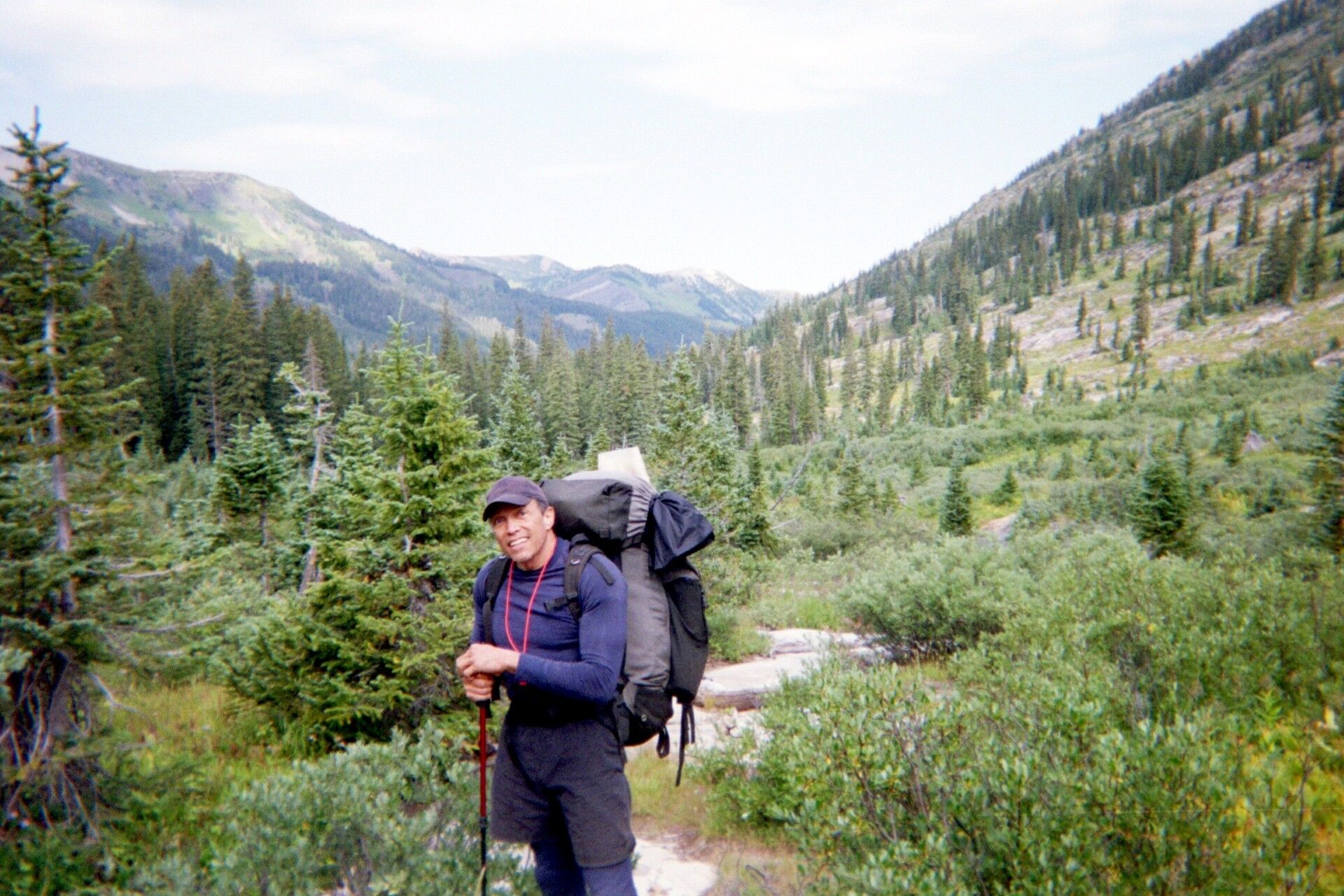
That idea stayed with him throughout every stage of life. In his twenties, challenge looked like winter mountaineering in Colorado snow. Years later, it meant backpacking through the Elk Mountains in his fifties. Today, after decades of courses, the motivation is different but somehow exactly the same.
Part of that is trust. Outward Bound, he said, always struck the right balance between adventure and safety, pushing people further than they thought they could go while still creating an environment where growth felt possible instead of reckless. But another part of it is harder to explain. Outward Bound became less of an activity and more of a foundation that quietly shaped how he viewed life, challenge, and resilience. Eventually, he wanted his daughters to experience that, too.
Wendell had grown up camping and backpacking from an early age under the guidance of a tough former scoutmaster who taught survival skills, confidence, and self-reliance. By the time he became a father himself, he realized those experiences had profoundly shaped him. He wanted his daughters to grow up with that same sense of capability. “I always told my wife I wasn’t going to raise them differently because they were girls,” he shared. “I wanted them to be strong, assertive, smart, and able.”
So Outward Bound became mandatory. The girls remember this family policy with varying levels of enthusiasm.
Lizzie, the oldest at 33, grew up on stories about her dad climbing Kilimanjaro and trekking through deserts and mountains. She saw Outward Bound as an adventure long before she stepped onto a course herself. She remembers eagerly anticipating her first expedition at age 12, imagining something new and exciting.
What she did not fully anticipate was how uncomfortable it would be. “There were slugs in our sleeping bags,” she remembered, laughing. “Wet socks for days. Drinking iodine water.” But somewhere in the middle of the exhaustion and discomfort, something shifted. Outward Bound taught her that fear and capability could exist at the same time.
Your body adjusts, your brain adjusts, and suddenly you realize you can actually do this.
One of her clearest memories involved belaying down a cliff face during her course. Standing at the edge, she remembers being terrified to lean backward into open air. Years later, she still thinks about that moment.
“You inevitably have to get down the cliff,” she said. “So eventually you just have to trust yourself and take the plunge.”
Now entering new phases of adulthood and career, she sees the metaphor everywhere. “You realize there are always going to be situations where you don’t fully know what you’re doing,” she shared. “But you can still do it.”
Her younger sisters had a very different attitude going into their first courses.
“I absolutely did not want to go,” Becky, 31, said.
Gwen, 27, agreed immediately. “I hated bugs. I was worried bugs were going to crawl into my sleeping bag,” she shared. “I was thirteen. I was terrified.”
For both of them, the first few days were the hardest. Everything felt unfamiliar: the physical exhaustion, the constant movement, the social dynamics of being thrown together with strangers in the wilderness. But somewhere around day three, the experience began to change.
“You adjust,” Gwen reflected on her course. “Your body adjusts, your brain adjusts, and suddenly you realize you can actually do this.”
By the end of her courses, she often found herself wishing they were longer. There was something unexpectedly peaceful about life stripped down to its essentials: hiking, cooking, setting camp, talking around campfires, waking up with the sun. “Being disconnected was honestly one of the best parts,” she said. “People joke about ‘touching grass,’ but really, that’s what it felt like. It was peaceful and I remember appreciating the extra headspace I was able to have.”
For Becky, experiences like that are part of what makes wilderness experiences so meaningful in the first place. “In normal life now, everything feels curated,” she reflected, “online, on social media, even experiences themselves. But in the outdoors, things go wrong. Plans change. You have to adapt in real time.”
And often, those unpredictable moments become the stories people remember forever.
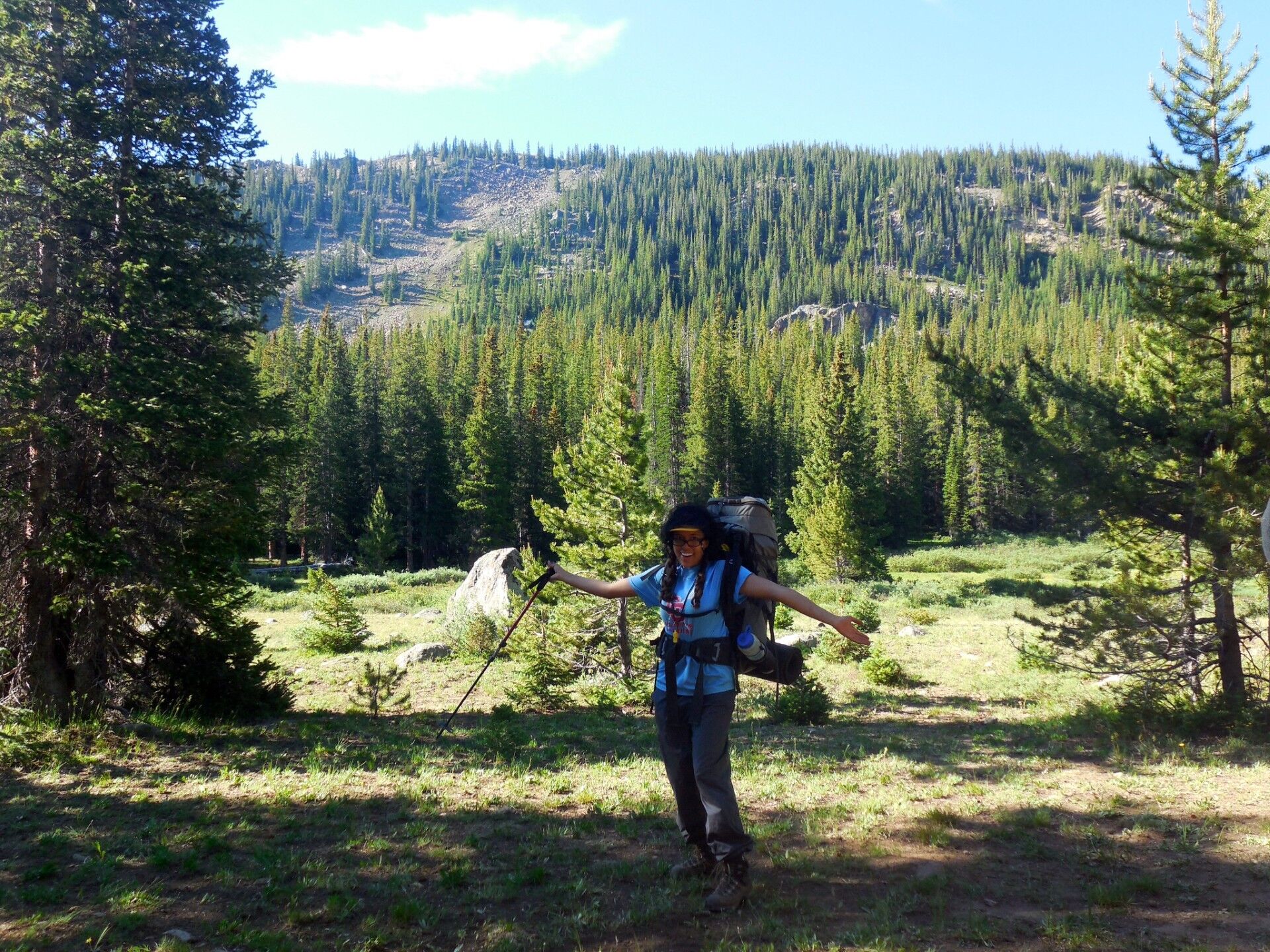
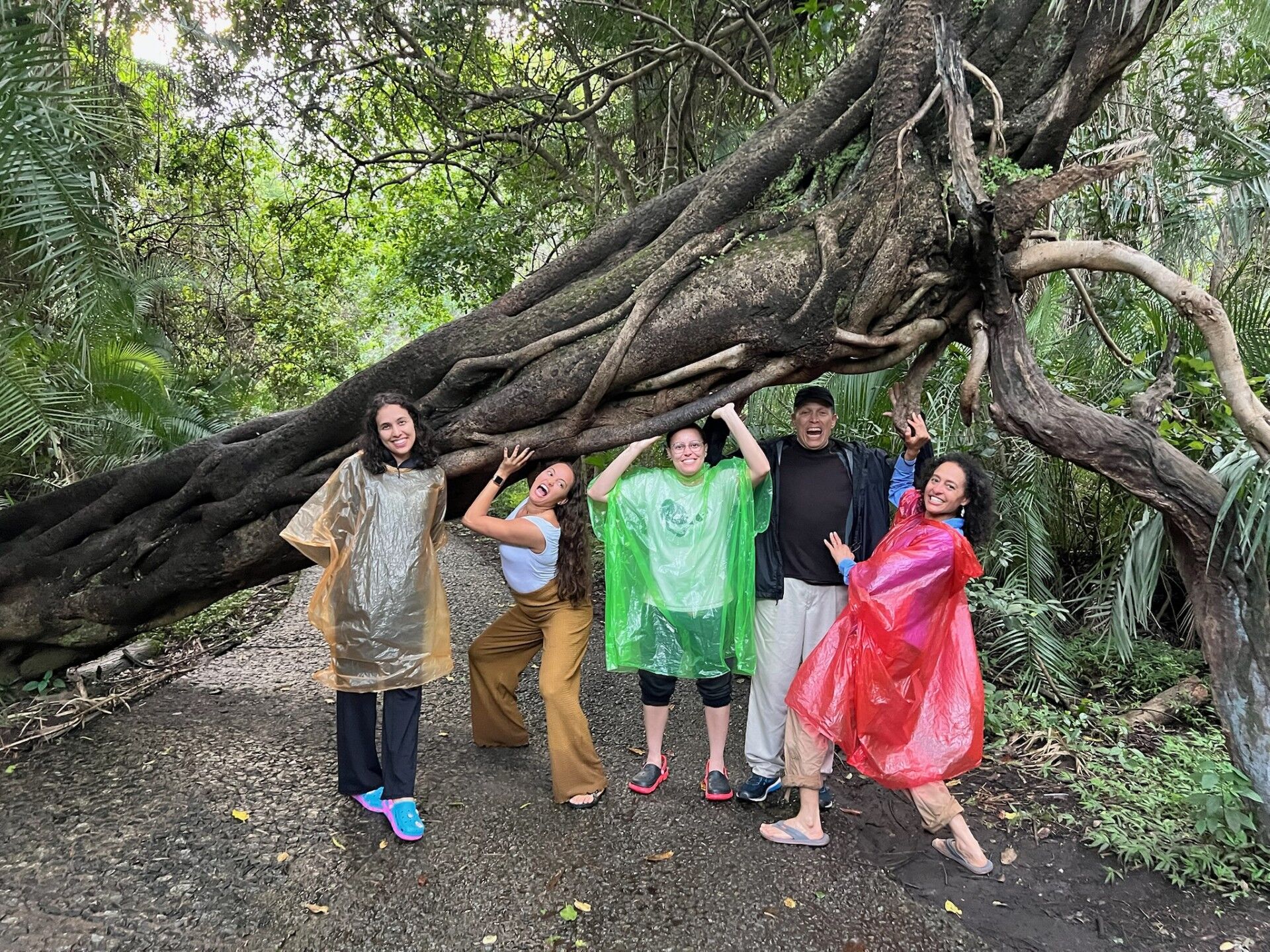
That may be part of why Outward Bound became such a lasting bond within the family. Not because every course was enjoyable every second, but because each person returned with stories, struggles, and moments of transformation that the others could fully understand. After every expedition, the family would gather to hear the stories: the soaked sleeping bags, the difficult hikes, the crew dynamics, the campfire conversations, the moments someone almost quit but didn’t.
“The debrief afterward was always part of it,” Becky said. “That became its own bonding experience.” Over time, the shared language of challenge became part of the family culture itself. They understood something about one another because they had all been tested in similar ways.
“We’ve all done something challenging outside before,” Lizzie said, “so when we’re in hard situations now, we know we can get through it.”
Gwen agreed. “There’s a toughness there,” she said. “We look at each other and know we can do hard things.”
That, ultimately, was what Wendell had hoped for all along.
Outward Bound was never meant to define his daughters’ lives or determine who they became. After high school, each daughter went in completely different directions: arts, athletics, music, careers, relationships, adulthood. Wendell never tried to script any of that. But he did want them to carry confidence into the world. Confidence not just in success, but in their ability to handle uncertainty, discomfort, and challenge. Listening to his daughters reflect on their experiences now, decades later, Wendell was grateful to hear how much they had carried forward from those expeditions.
Gwen shared a similar sentiment, reflecting on how meaningful the experience was during adolescence. “Especially as a teenager, it came at such an important time,” she said. “You’re still figuring out who you are and growing into yourself. Outward Bound gave us space to slow down, journal, and really think through things. That kind of reflection is so valuable for teenagers.”
In many ways, the family’s story mirrors the philosophy at the heart of Outward Bound itself. People grow when they are challenged, supported, uncomfortable, connected, and forced to discover strengths they did not know they possessed. For the Goins family, those lessons did not stay in the wilderness. They have appeared later in careers, relationships, parenting, travel, and beyond. They appeared in moments where someone had to keep moving forward despite fear, exhaustion, or doubt.
Outward Bound gave us space to slow down, journal, and really think through things. That kind of reflection is so valuable for teenagers.
And even now, after forty-five years of courses, Wendell still talks about Outward Bound less like a hobby and more like a lifelong practice. At twenty, challenge meant winter mountaineering in Colorado. At sixty, it meant continuing to move at all.
The family still talks about doing another adventure together someday, perhaps the Grand Canyon this time. And if they do, it likely will not be because any of them expect it to be easy. That was never really the point.
The point was always what waits on the other side of challenge; the quiet realization that you are stronger, more capable, and more connected than you thought you were before you went into the unknown.
Mindy, the mom, said it best: “It’s a family bonding experience that I would highly recommend to anyone considering it. So often, families become fragmented, and experiences like this give you the chance to truly learn more about your sister, your brother, your husband, your wife, your mom, or your dad. You notice little nuances and strengths in each other when you go on an adventure like this.”